If you are trying to decide between a ductless mini split and central air conditioning, you are not going to find a simple answer here. That is because there is no one system that is better for everyone. The right choice depends on your home, your budget, how you use your space, and what matters most to you.
What we can give you is a clear, honest look at how each system works, what it costs, and where each one shines. By the end of this guide, you will know which direction makes sense for your situation.
How Each System Works
Before getting into pros and cons, it helps to understand what you are actually comparing.
Central air conditioning uses a single outdoor unit connected to your home’s duct system. The outdoor unit cools refrigerant, which travels to an indoor air handler or coil. The air handler blows conditioned air through ducts to every room in your home through supply vents. Return vents pull air back to the system to be cooled again. One system handles the entire home.
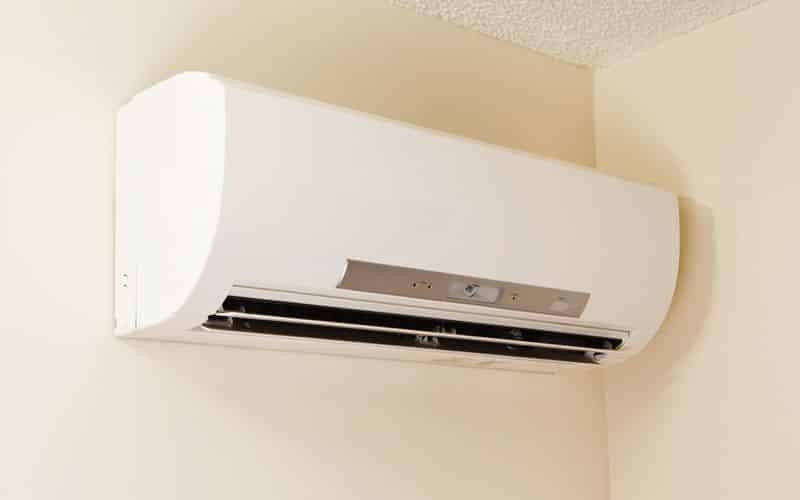
A ductless mini split also has an outdoor unit, but instead of connecting to a duct system, it connects directly to one or more indoor air handlers mounted on walls or ceilings inside specific rooms. There are no ducts. Each indoor unit controls the temperature of the room or zone it is in, independently of every other room.
Both systems move heat using refrigerant. Both can provide both heating and cooling. The key difference is how they distribute conditioned air and how many zones they serve.
Mini Split vs Central Air: Cost at a Glance
| Ductless Mini Split | Central Air | |
| Upfront cost | Higher per zone ($3,000 to $5,000+ per zone installed) | Lower for whole-home coverage ($5,500 to $12,000+ installed) |
| Operating cost | Generally lower (less energy loss) | Varies; duct losses add 20 to 30% |
| Installation disruption | Minimal (no ductwork) | Significant if adding or replacing ducts |
| Lifespan | 15 to 20 years | 12 to 17 years |
| Best for | Specific zones, no ductwork, additions | Whole-home coverage with existing ducts |
These are starting points. Your actual cost depends on your home’s size, layout, and which specific equipment you choose. A free estimate from a licensed technician is the only way to know your real number.
The Pros of a Ductless Mini Split
Higher Efficiency, Lower Monthly Bills
Mini splits are among the most efficient HVAC systems available. Many models reach SEER2 ratings above 20, with some premium units reaching 30 or higher. For comparison, a high-efficiency central air system typically reaches 18 to 22 SEER2.
The biggest reason for the efficiency difference is ductwork. When air travels through ducts to reach your rooms, some of that conditioned air escapes through leaks and absorbs heat through duct walls before it arrives. Studies consistently show that duct losses account for 20 to 30 percent of cooling energy in a typical home. Mini splits eliminate that loss entirely because the refrigerant travels to the room and the air handler is right there in the space it is conditioning.
In Shreveport, where your cooling system runs hard for seven or eight months of the year, that efficiency difference translates into real savings on your electric bill every month.
Built-In Zoning Without Extra Equipment
Each indoor unit in a mini split system operates independently. You can set one room to 72 degrees while keeping the guest bedroom at 78 because nobody is using it. You can shut off conditioning in rooms that are unoccupied and only cool the spaces where people actually are.
Central air treats your whole home as one zone. To get zoning with a central system, you need to add zone dampers, multiple thermostats, and additional controls, which adds significant cost. Zoning is built into every mini split system from the start.
For Shreveport families where different people have different comfort preferences, or for homes where certain rooms get much more sun than others, this flexibility is a significant advantage.
Perfect for Homes Without Ductwork
Some Shreveport homes simply do not have existing ductwork, including older homes built before central air was standard, homes that have always relied on window units, converted spaces, and historic properties where cutting through walls and ceilings for ductwork would be invasive and expensive.
A mini split system needs only a small hole in the wall (typically about three inches) to run the refrigerant line and electrical connection between the outdoor and indoor units. No major construction. No ripping open ceilings. No disruption to your home’s structure.
If your home does not already have ducts, a mini split installation is almost always less expensive and less disruptive than building a duct system from scratch.
Heats and Cools in One System
Every mini split is a heat pump, which means it provides both heating and cooling. In the summer it works like an air conditioner, pulling heat out of your home. In the winter it reverses the process, pulling heat from outdoor air and bringing it inside.
Louisiana’s mild winters are actually ideal for heat pump operation. Heat pumps become less efficient as outdoor temperatures drop below freezing. In Shreveport, where winter temperatures rarely stay below freezing for extended periods, a mini split can handle the vast majority of your heating needs efficiently without ever switching to backup electric heat.
This means a mini split system can replace both your air conditioner and your heating system, which simplifies your equipment and can reduce your total investment if you are replacing both at once. Learn more about our heating installation options to see how this could work for your home.
Superior Humidity Control
This matters more in northwest Louisiana than almost any other factor.
Variable-speed mini splits run at whatever level the room needs rather than cycling fully on and fully off. Running at a lower, steadier speed means the indoor coil stays cold longer, which pulls far more moisture out of the air than a system that only runs in short bursts.
For Shreveport homeowners who struggle with that sticky, clammy indoor feeling even when the AC is running, a variable-speed mini split often solves the problem better than any other approach. The combination of high efficiency, long runtimes, and superior dehumidification makes these systems especially well-suited to Louisiana’s climate.
The Cons of a Ductless Mini Split
Higher Upfront Cost Per Zone
A single-zone mini split serving one room or addition typically costs $3,000 to $5,000 installed. If you want to cover multiple rooms with separate indoor units, those costs add up quickly. For a whole-home installation covering five zones, the total investment can exceed what a central air system would cost for the same home.
If your goal is whole-home coverage and you have existing ductwork in good condition, central air will almost always be the more affordable path.
Visible Indoor Units
Mini split indoor units mount on the wall or ceiling of the room they serve. They are not hidden. Some homeowners are completely fine with this. Others find the aesthetic disruption significant, especially in formal living spaces or historically styled homes. Modern mini split units have become sleeker and more discreet than older models, but they are still visible fixtures in your room.
Each Zone Requires Its Own Indoor Unit
To cover a room with a mini split, that room needs its own indoor unit. A three-bedroom home needs at minimum three indoor units to serve all the bedrooms, plus additional units for living spaces. This is not a problem for targeted installations, but it is a consideration for full-home coverage.
The Pros of Central Air
Lower Upfront Cost for Whole-Home Coverage
For a home that already has ductwork in good condition, central AC installation delivers whole-home coverage for less upfront than a multi-zone mini split system covering the same square footage. This is the clearest advantage central air has over mini splits for most Shreveport homeowners.
Familiar Technology Most Homes Already Have
The majority of Shreveport homes already have a central air system in place. Replacing an aging central system with a new one is a straightforward upgrade that uses the existing ductwork infrastructure. There is no learning curve and no visible change to how your home looks inside.
Consistent Whole-Home Coverage
Central air treats your entire home as a single space. Every room receives conditioned air from one system through one thermostat. For homeowners who want simplicity and consistent temperatures throughout the house without thinking about individual room settings, central air delivers that straightforwardly.
Whole-Home Air Filtration
Your central air system pulls all of the air in your home through a filter before circulating it again. This means every cubic foot of indoor air passes through filtration on a regular cycle. Mini splits do have filters, but they only filter the air in the zone each unit serves. For homeowners focused on indoor air quality, whole-home filtration is a genuine advantage of central air, and it can be enhanced with upgraded filter media or air purification accessories.
The Cons of Central Air
Duct Energy Losses
This is central air’s biggest weakness. Ducts that run through attics, crawl spaces, and interior wall cavities lose conditioned air through leaks and absorb heat through duct walls before the air reaches your rooms. The Department of Energy estimates these losses at 20 to 30 percent of cooling energy in a typical home.
In Shreveport’s heat, that is a significant amount of wasted electricity on your bill every month. Sealing and insulating ducts reduces but rarely eliminates these losses.
No Zoning Without Added Equipment
A standard central air system treats your whole home as one zone. Every room gets the same call for cooling whether it needs it or not. Adding zoning to a central system requires dampers, multiple thermostats, and a zone controller, which adds cost and complexity.
Requires Existing or New Ductwork
If your home does not have ducts, installing a central air system means building an entirely new duct system. In an existing home, this is invasive and expensive. Ducts have to run through walls, ceilings, and floors, and the disruption to a finished home can be significant.
When a Mini Split Makes More Sense for Shreveport Homeowners
Here are the situations where a mini split is clearly the stronger choice:
Room additions and converted spaces. Sunrooms, garage conversions, bonus rooms, and additions often cannot be practically connected to an existing duct system. A mini split handles these spaces perfectly without touching your existing system.
Older homes without existing ductwork. Many older Shreveport and Bossier City homes were built before central air was standard and have never had ductwork. Adding a duct system to a finished older home is expensive and disruptive. Mini splits provide full comfort without any of that work.
Homes with problem rooms. If you have one room that is always too hot or too cold regardless of what you set the thermostat to, adding a mini split to that specific zone solves the problem without changing anything else about your system.
When you are replacing both AC and heat. If your air conditioner and heating system both need replacement at the same time, a multi-zone mini split covering the whole home can replace both systems in one investment, and the heating efficiency in Louisiana’s mild winters makes the math work well.
When humidity control is a priority. Variable-speed mini splits are among the most effective systems available for managing indoor humidity, which is particularly important for Shreveport homeowners who struggle with sticky indoor air.
When Central Air Makes More Sense
Your home already has good ductwork. If your ducts are in good shape and properly sized, replacing your central air system with a new one is the most cost-effective path to whole-home comfort.
New construction. In a new home, ductwork can be designed and installed correctly from the start, which eliminates many of central air’s drawbacks. A new central system in a properly ducted new home is efficient and effective.
You prefer the simplest, most familiar setup. If you want one thermostat, one system, and consistent temperatures throughout your home without thinking about zone management, central air delivers that with less complexity.
Can You Have Both?
Absolutely, and it is more common than people think.
Many Shreveport homeowners run a central air system for the main living areas of their home and add one or two mini split units for spaces that need independent control: a home office, a workshop, a sunroom, or a master bedroom where someone runs warmer or cooler than the rest of the house.
This hybrid approach gets the cost efficiency of central air for the majority of the home while using mini splits for the spaces where zoning and efficiency matter most.