When temperatures drop in Shreveport, the last thing you want is a furnace that will not fire. If you have an older gas furnace and it has stopped producing heat, one of the first places to check is the pilot light. A pilot light that is out, weak, or will not stay lit is one of the most common heating complaints in older homes, and in many cases, it points to a specific, fixable problem.
This guide explains what the pilot light does, why it goes out, how to relight it safely, and when the situation calls for a professional.
What Is a Furnace Pilot Light?
A pilot light is a small, continuously burning gas flame located inside your furnace near the main burner assembly. Its job is simple: when the thermostat calls for heat, the gas valve opens and the pilot flame ignites the main burner. The furnace runs its heating cycle, then the main burner shuts off and the pilot keeps burning until the next call for heat.
Most furnaces built before the mid-1990s use a standing pilot light. Newer furnaces replaced the pilot with an electronic ignition system, which produces a spark or a brief hot surface glow only when needed, rather than burning continuously.
If your furnace is newer and the pilot light concept does not apply, but the system is still not heating, the issue is likely with the electronic igniter or control board. Our heating repair team handles both types.
How to Check If Your Pilot Light Is Out
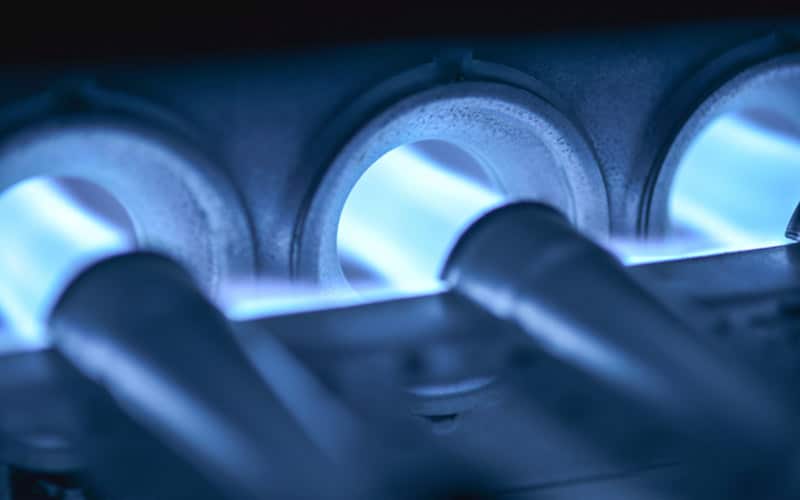
Look for a small observation window on the front panel of your furnace, usually near the bottom of the unit. Through it you should be able to see a small blue flame burning steadily near the burner assembly. If you see no flame, the pilot is out.
A healthy pilot burns a steady, solid blue. A yellow or orange flame is a warning sign. Yellow or orange color indicates incomplete combustion, which can mean the pilot orifice is dirty or the gas-to-air mixture is off. A discolored pilot flame should be evaluated by a technician rather than simply relighted and ignored.
Why Does a Furnace Pilot Light Keep Going Out?
A Draft or Air Disturbance
The simplest and most common cause. A gust of air from a nearby vent, a door being opened, or even the furnace door being replaced after inspection can extinguish the pilot flame. If the pilot goes out once and stays lit normally after relighting, a draft was likely the cause and no further action is needed beyond monitoring.
A Dirty or Partially Clogged Pilot Orifice
The pilot orifice is the tiny opening through which gas flows to feed the flame. Over time, dust and debris accumulate inside the furnace and can partially obstruct this opening. When the orifice is partially clogged, gas flow to the pilot is reduced, the flame becomes weak or unstable, and it is easily extinguished. A dirty pilot often produces a small, flickering flame that does not look right even after relighting.
A Worn or Misaligned Thermocouple
This is the most common mechanical cause of a pilot that will not stay lit. The thermocouple is a safety device positioned so that the pilot flame heats its tip. As long as the pilot burns, the thermocouple generates a small electrical signal that holds the gas valve open. If the pilot goes out, that signal stops, the gas valve closes, and unburned gas cannot accumulate in the home.
When a thermocouple wears out or shifts out of alignment, it may not generate a strong enough signal even with the pilot burning normally. The gas valve treats this as a pilot-out condition and closes. The classic symptom: you hold the reset button, the pilot lights, you release it, and the flame goes out within 30 to 60 seconds.
Thermocouple replacement is an inexpensive, quick repair that a technician can handle in a single visit. It is one of the most common furnace repairs on older systems in the Shreveport area.
A Problem With the Gas Supply
If no gas is reaching the furnace, the pilot cannot light regardless of what else you do. Before assuming the furnace itself is the problem, confirm that your other gas appliances, like your water heater or gas range, are working normally. If they are not, contact your gas provider. If only the furnace is affected, the issue may be with the furnace’s gas valve itself rather than the supply line.
A Failing Gas Valve
The gas valve controls flow to both the pilot and the main burner. A valve that is beginning to fail may not allow consistent gas flow to the pilot, resulting in a flame that is unreliable or cannot be established at all even after multiple relighting attempts. Gas valve replacement is a job for a licensed technician.
How to Relight a Furnace Pilot Light
If the pilot is simply out and you do not smell gas, you can attempt to relight it yourself. Always read the label on your specific furnace first since steps vary by model.
General procedure:
- Turn the furnace control knob to the “Off” position. Wait at least five minutes for any residual gas to dissipate before introducing a flame.
- While waiting, check carefully for any odor of gas near the furnace. If you smell gas, do not attempt a relight. Leave the house, leave the door open, and call your gas provider and 911 from outside.
- After five minutes, turn the control knob to “Pilot.”
- Press and hold the reset button or the control knob (depending on your furnace model) to allow gas to flow to the pilot orifice.
- While holding the button, use a long-reach lighter or long match to ignite the pilot flame.
- Keep holding the reset button for 30 to 60 seconds after the flame lights. This gives the thermocouple time to heat up and generate the signal that keeps the gas valve open.
- Release the button slowly. If the flame stays lit, turn the control knob to “On” and raise the thermostat above the current room temperature to test whether the main burner ignites.
If the flame goes out when you release the button, wait a few minutes and try again with a longer hold time. After two or three failed attempts, the problem is mechanical and needs a technician.
When to Call for Furnace Repair
Stop troubleshooting yourself and call a professional if any of the following apply:
- You smell gas anywhere near the furnace
- The pilot lights but goes out within a minute of releasing the reset button, on multiple attempts
- The pilot flame is yellow or orange rather than blue
- The pilot lights and stays on, but the main burner will not ignite
- The furnace makes banging, rattling, or grinding sounds during startup
- You are not comfortable working near gas components
Our heating repair team serves Shreveport and the surrounding area. A technician can diagnose whether the issue is a thermocouple, a gas valve, a clogged orifice, or something else, and give you upfront pricing before any repair begins.
Is It Time to Replace Instead of Repair?
Shreveport gets real winters. Northwest Louisiana sees freezing temperatures, ice, and the occasional winter storm, so a reliable heating system is not optional. If your furnace is more than 15 to 20 years old and has needed multiple repairs in recent seasons, a repair on the pilot system may be worthwhile short-term but is not a long-term solution.
A modern heating installation with electronic ignition, higher efficiency ratings, and better safety controls is a more reliable long-term investment than continuing to service an aging system. Our technicians can assess your current furnace honestly and help you weigh the repair versus replace decision.
If you are on the fence, consider a furnace maintenance visit. It gives our technician a chance to evaluate the full system condition and help you make that decision with real information rather than guesswork.
Staying Ahead of Furnace Problems
The best way to avoid pilot light issues and other furnace problems is annual preventive maintenance before the heating season begins. A heating tune-up includes inspecting and cleaning the pilot orifice, testing the thermocouple output, checking gas pressure and valve operation, and verifying all safety controls. Problems that are caught in October are much less expensive and disruptive than the same problems discovered during a Shreveport cold snap in January.
Our Shield of Protection maintenance plan covers seasonal tune-ups, priority scheduling, and 20% off any service calls that come up between visits.
Ready to Get Your Furnace Fixed in Shreveport?
Southern Air has been serving the Shreveport area since 1984. Whether your pilot light needs a simple relight and inspection or a thermocouple replacement, our technicians will diagnose the problem clearly and give you honest, upfront pricing before any work begins.
Call us at (318) 310-1312 or schedule online to book a heating repair visit today.