If you are researching ductless mini splits for your Shreveport home, you have probably noticed that “mini split” covers a range of different products, not just one specific unit. The outdoor compressor is fairly standard across brands and configurations, but the indoor air handling units, called heads, come in several distinct types. Choosing the right type of head for your space affects how well the system performs, what it costs to install, and how easy it is to live with long-term.
This guide explains what a ductless mini split is, breaks down each indoor head type with honest pros and cons, and helps you figure out which configuration makes the most sense for your home in Shreveport.
What Is a Ductless Mini Split Air Conditioner?
A ductless mini split system heats and cools your home without using air ducts. A traditional central air system pushes conditioned air through a network of supply ducts to every room. A mini split instead connects an outdoor compressor directly to one or more indoor heads installed in the spaces you want to condition.
Each indoor head contains its own fan and evaporator coil and manages the temperature in its zone independently. A single outdoor unit can support anywhere from one to eight indoor heads depending on the system design, though most residential applications use one to four.
The connection between the outdoor unit and each indoor head is a small conduit that passes through the wall, carrying refrigerant lines, a power cable, and a condensate drain. No ductwork is needed.
Ductless mini splits are a strong fit for Shreveport because they handle both cooling and heating effectively, and the best variable-speed models perform well across a wide temperature range. Unlike some heat pump equipment that struggles in genuinely cold weather, modern high-efficiency mini splits maintain good heating output even when Shreveport temperatures drop into the 20s and 30s during winter cold snaps.
The Three Types of Ductless Mini Split Indoor Heads
High Wall Mount
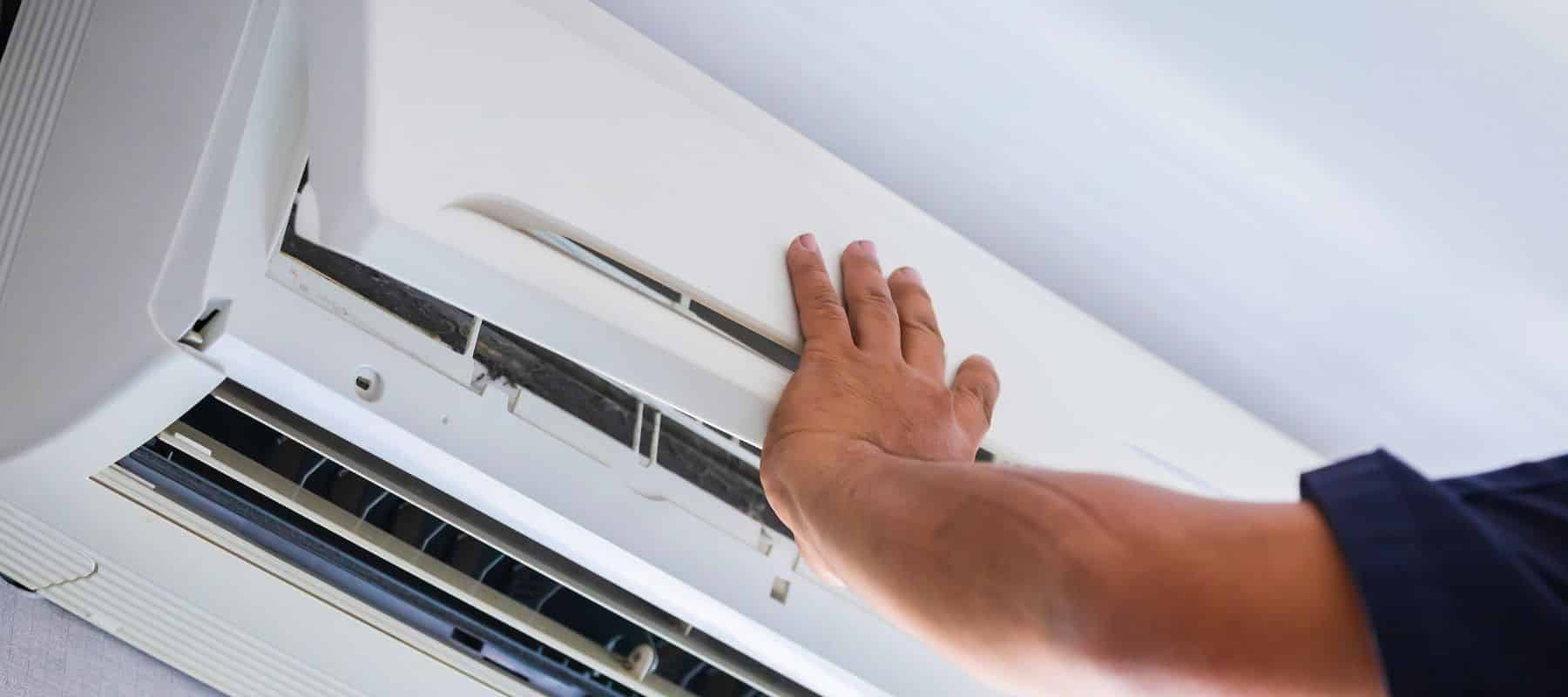
The high wall mount is the most common type of ductless indoor unit. It mounts to an interior wall near the ceiling and distributes conditioned air downward across the room using a fan and directional louvers that can be adjusted for coverage angle.
Best for: Bedrooms, living rooms, home offices, garages, sunrooms, home additions, and essentially any standard room with available interior wall space near the ceiling.
Pros:
- The most affordable of the three head types to purchase and install
- Easiest to access for filter cleaning, which should be done monthly or every few months depending on use
- Widest range of available sizes, from small 9,000 BTU units for bedrooms up to large 24,000 BTU units for open areas
- Often includes the most advanced features, including occupancy sensing, auto-restart after power interruption, and multi-directional airflow control
- Straightforward installation with minimal wall work beyond the line set penetration
Cons:
- Visible on the wall and extends several inches into the room
- Some homeowners prefer a less prominent look for formal living spaces
For the majority of Shreveport homes and applications, a high wall mount is the right starting point. It performs reliably, costs the least, and is the simplest to service over its lifespan. If there is no strong reason to choose one of the other types, this is the one to use.
Floor Mount
A floor mount unit installs on or near the floor, low on the wall, rather than up near the ceiling. It can be partially recessed into the wall to reduce how much it protrudes into the room, though it will still extend a few inches into the space. Air is distributed horizontally from floor level rather than cascading downward from the ceiling.
Best for: Rooms where high wall space is unavailable due to large windows reaching nearly to the ceiling, rooms with sloped or vaulted ceilings that make high wall placement impractical, attic conversions, or situations where the homeowner prefers airflow at a lower level.
Pros:
- Solves installation challenges where a high wall mount is not feasible
- Reliable efficiency and performance
- Airflow at floor level can be particularly noticeable during heating cycles, since warm air rises naturally from the unit into the room
Cons:
- Less even air distribution in taller rooms since cool air from the unit tends to stay near the floor rather than reaching upper areas
- Typically does not include the same advanced occupancy detection and sensing features as high wall units because those features are calibrated for ceiling-level placement
- More susceptible to being blocked by furniture if room layout does not maintain adequate clearance in front of the unit
Floor mount units are the right solution when the alternative head types cannot be practically installed. They are not the first recommendation for a standard room, but they perform reliably in the applications where they are the best fit.
Ceiling Cassette
A ceiling cassette is installed into a ceiling opening so that only the grille is visible, flush with or slightly below the ceiling surface. Air is distributed in multiple directions outward from the center of the unit rather than from a single directional fan, which can provide more even coverage across a wider or more open space.
Best for: Large open floor plans, commercial spaces, or homeowners who want the indoor unit to be as visually unobtrusive as possible and who have the ceiling structure to accommodate the installation.
Pros:
- The most discreet option, with only a grille panel visible at the ceiling
- Good multi-directional airflow coverage in open or square-shaped rooms
- Works well in applications where wall space is unavailable on any wall
Cons:
- Significantly more expensive to install because ceiling framing must be completed before the unit can go in, and ceiling surfaces must be patched and finished around the unit
- Requires a condensate pump to push moisture upward against gravity for drainage. The pump is an additional component that needs periodic maintenance and produces audible noise when running
- Harder to access for filter cleaning and routine service compared to wall-mounted units
- Typically does not include the same advanced sensor features as high wall mount units due to the different installation geometry
Ceiling cassettes are a good solution in the right space. They are not a general recommendation for standard bedrooms or living rooms, where the added cost and maintenance complexity is not offset by a meaningful performance advantage over a high wall mount.
Single-Zone vs. Multi-Zone Systems
Single-Zone
One outdoor unit paired with one indoor head. The right choice when you need to condition one specific space independently of your existing HVAC setup. In Shreveport, common single-zone applications include:
- A room addition or converted space not served by existing ductwork
- A garage or workshop, where extending residential ductwork is not code-compliant
- A sunroom or enclosed porch that becomes uncomfortable in summer and during winter cold snaps
- A bedroom or home office that consistently runs too warm or too cool compared to the rest of the house
- A guest suite where the occupants want independent control
Single-zone systems are the most affordable entry point and are usually installed in a single day.
Multi-Zone
One outdoor unit connected to two or more indoor heads, each operating independently. The right choice when you want to condition multiple rooms without ductwork, or when you want zone-by-zone control throughout the home.
In Shreveport, multi-zone ductless systems are a practical whole-home solution for older homes where the original ductwork is aging, undersized, or no longer worth preserving. They are also used alongside existing central systems to address specific zones or additions that the main system cannot adequately serve.
Remember that the outdoor unit has a total capacity ceiling that all zones share. Running all zones simultaneously at peak demand may limit how aggressively each zone can cool or heat compared to a dedicated single-zone system. Proper outdoor unit sizing for the combined zone load is essential.
Cooling Only vs. Heat Pump
Virtually all mini splits sold today function as heat pumps, providing both cooling in summer and heating in winter from the same refrigerant system. For Shreveport homeowners, this is the configuration you want.
A cooling-only unit cannot be converted to heating after the fact. Shreveport’s winters are real. December and January temperatures regularly drop into the 20s and 30s, and cold snaps can bring sub-freezing temperatures for days at a stretch. A system that does nothing during those periods is not the right investment for northwest Louisiana.
Modern heat pump mini splits maintain effective heating output in cold weather because their inverter-driven compressors can operate over a wide range of outdoor temperatures. High-performance units rated for low ambient operation can extract meaningful heat from outdoor air even when temperatures approach 0 degrees Fahrenheit, well beyond what Shreveport typically requires.
When a Mini Split Makes Sense in Shreveport
- Home additions, sunrooms, or converted spaces not served by existing ducts
- Older homes without central ductwork where a full duct installation is impractical or costly
- Garages, workshops, and outbuildings
- Rooms that are consistently uncomfortable despite a functioning central system
- Any situation where zone-by-zone independent control is a priority
- When your existing central system needs replacement and you want to evaluate ductless as a whole-home alternative
What About Homes With Central Air Already?
If your home has a functioning central air system with ductwork in good condition, a full ductless replacement is not always necessary or more cost-effective. Many Shreveport homeowners run their central system for the main living areas and add a single-zone ductless mini split for a problem room, addition, or detached space.
If your central system is running but performance is not what it should be, an AC tune-up can determine whether the existing equipment can be improved before adding new equipment. Duct cleaning can also help if airflow and efficiency problems trace back to debris buildup in the duct system.
Brands We Install
Southern Air installs ductless systems from Mitsubishi, Daikin, Carrier, and American Standard. All are well-suited to Shreveport’s combination of hot, humid summers and genuine winters.
Ready to Talk About a Mini Split for Your Shreveport Home?
Southern Air has been serving the Shreveport area since 1984. Our team will evaluate your home, recommend the right head type and zone configuration, and give you upfront pricing before any work begins. We offer flexible financing and check our specials page for current offers.
Call us at (318) 310-1312 or schedule a consultation online to get started.